This article previously appeared in Progressive Grocer.
“We’ve reached peak boutique grocery store.”
So declared Architectural Digest this past December in a piece about the trend toward specialty grocers with picture-perfect spaces. Think L.A.’s Erewhon, where you might sip a $22 smoothie and rub shoulders with celebrities like Miley Cyrus or Jake Gyllenhaal.
Erewhon and boutiques like New York’s Happier Grocery and Meadow Lane lean heavily on design in their efforts to create rich in-store experiences. So do more mainstream specialty grocers, such as Whole Foods Market and Wegmans.
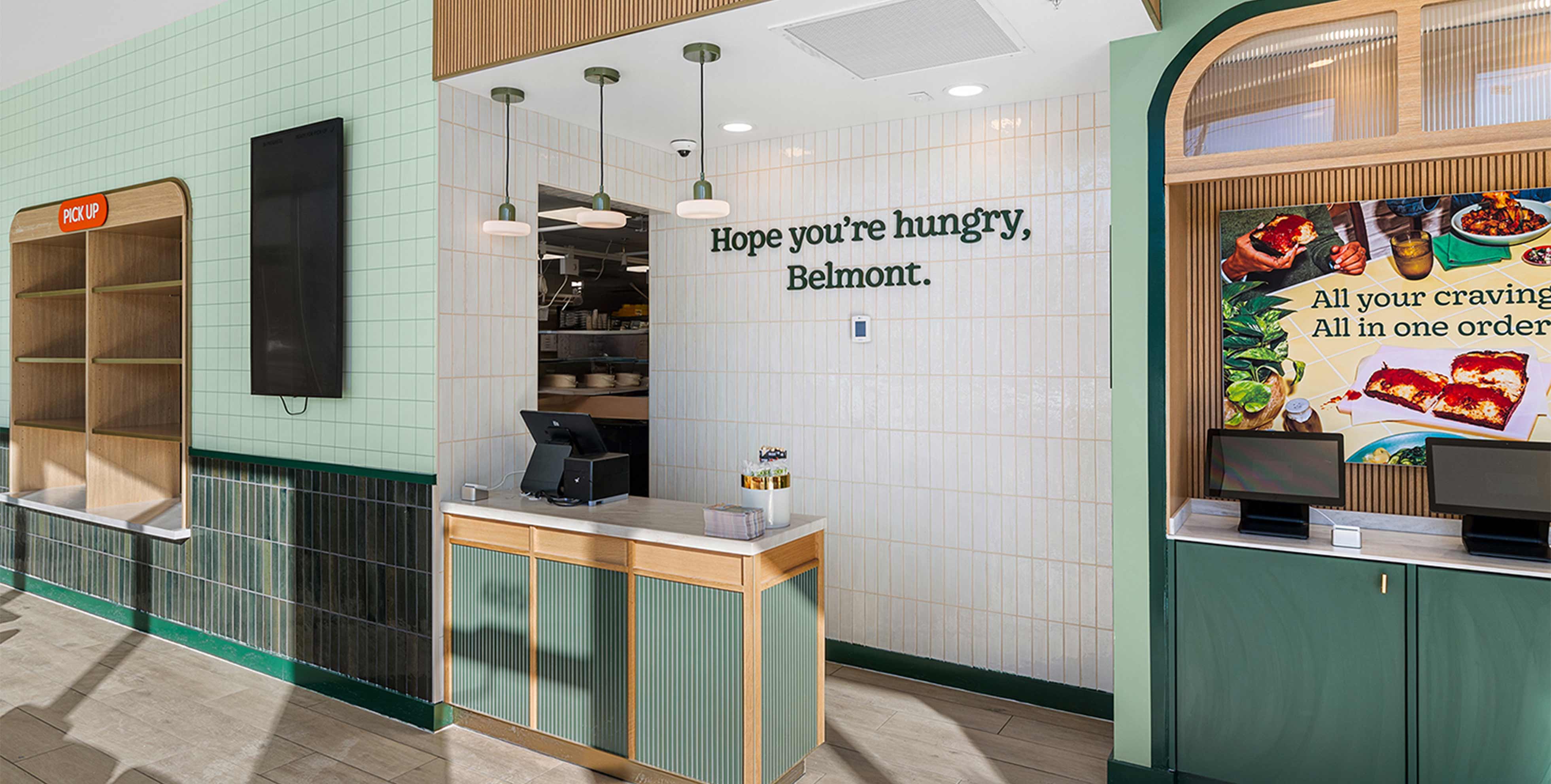
For years now, the temptation for traditional grocers like Publix and Kroger has been to steal a page from specialty retail and make their restaurants, cafés and bakeries more elaborate while elevating the quality of their fixtures, flooring, lighting and displays, especially for stores in affluent markets.
But soaring prices are looming larger than ever for shoppers. Grocery executives already report more trading down behavior as Americans from a wide swath of incomes flock to discount operators like fast-expanding Aldi, which has announced plans to open 180 stores this year.
Mainstream grocers should be refocusing more of their design and merchandising strategies to highlight value.
Diving into the data
When supermarket real estate execs sit down with us to brainstorm new stores and renovations, we’re encouraging them to carefully consider today’s behavioral shifts. What is market research saying about price-consciousness in the trade area?
If the research points to a real risk of market share erosion, it might be time to take inspiration, not from premium specialty stores, but from top-performing discount chains.
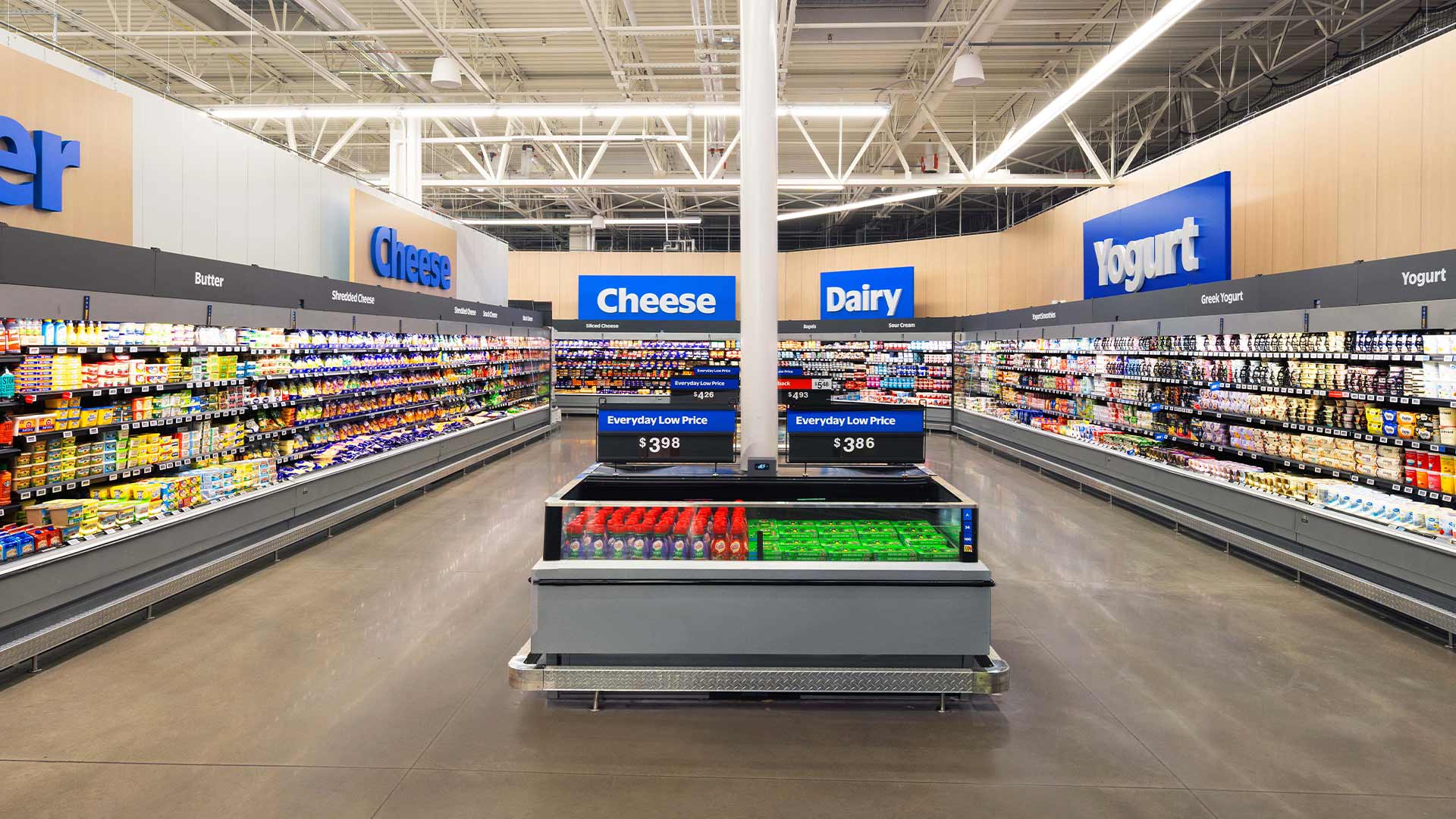
In our work for one such supermarket chain in the Northeast, we have emphasized simple, open store layouts with exposed ceilings and trusses instead of more expensive drop ceilings. This makes the store feel airier and more warehouse-like, reinforcing the notion that value is to be found there.
Hidden messages
For mainstream grocers, the challenge is to find the right balance between higher-end and lower-cost materials and the different messages they convey.
Subtext is always part of store design. Imagine an elaborate in-store café with quartz countertops, multi-colored glass tiles, architectural lighting and a stainless-steel espresso machine. While this certainly creates a pleasant experience, it also sends a secondary message that is less welcome today: “This place must be really expensive.”
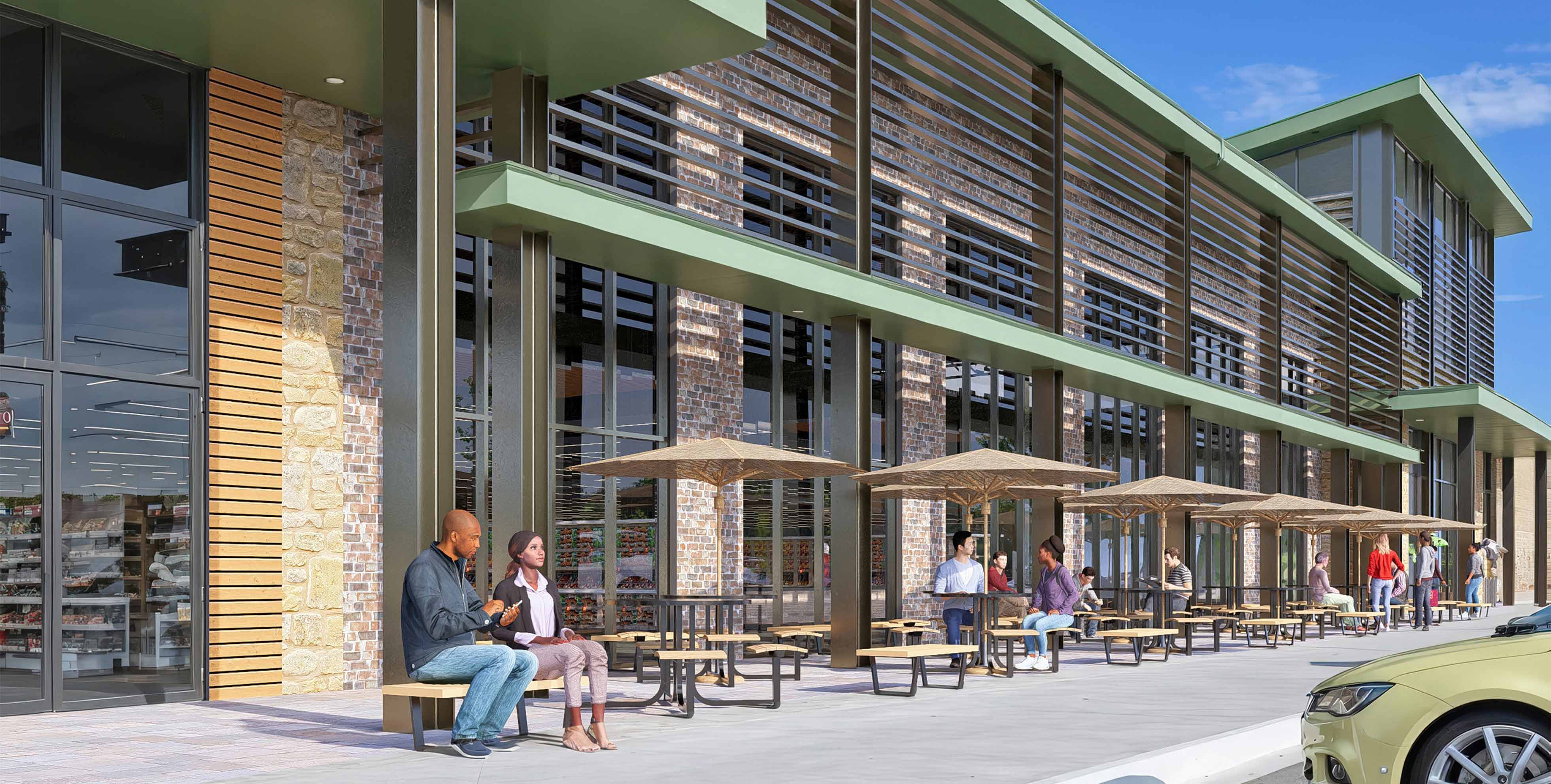
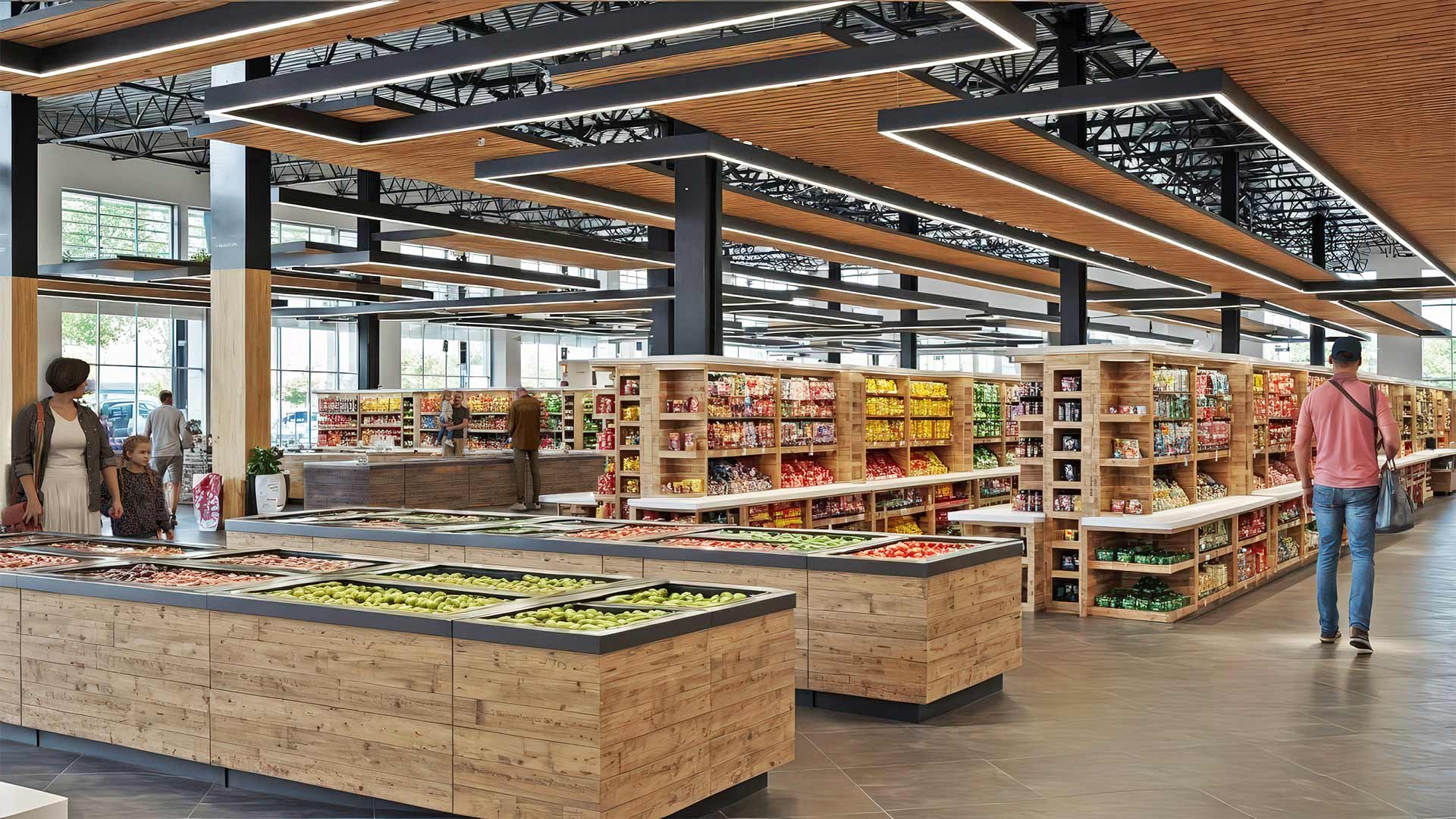
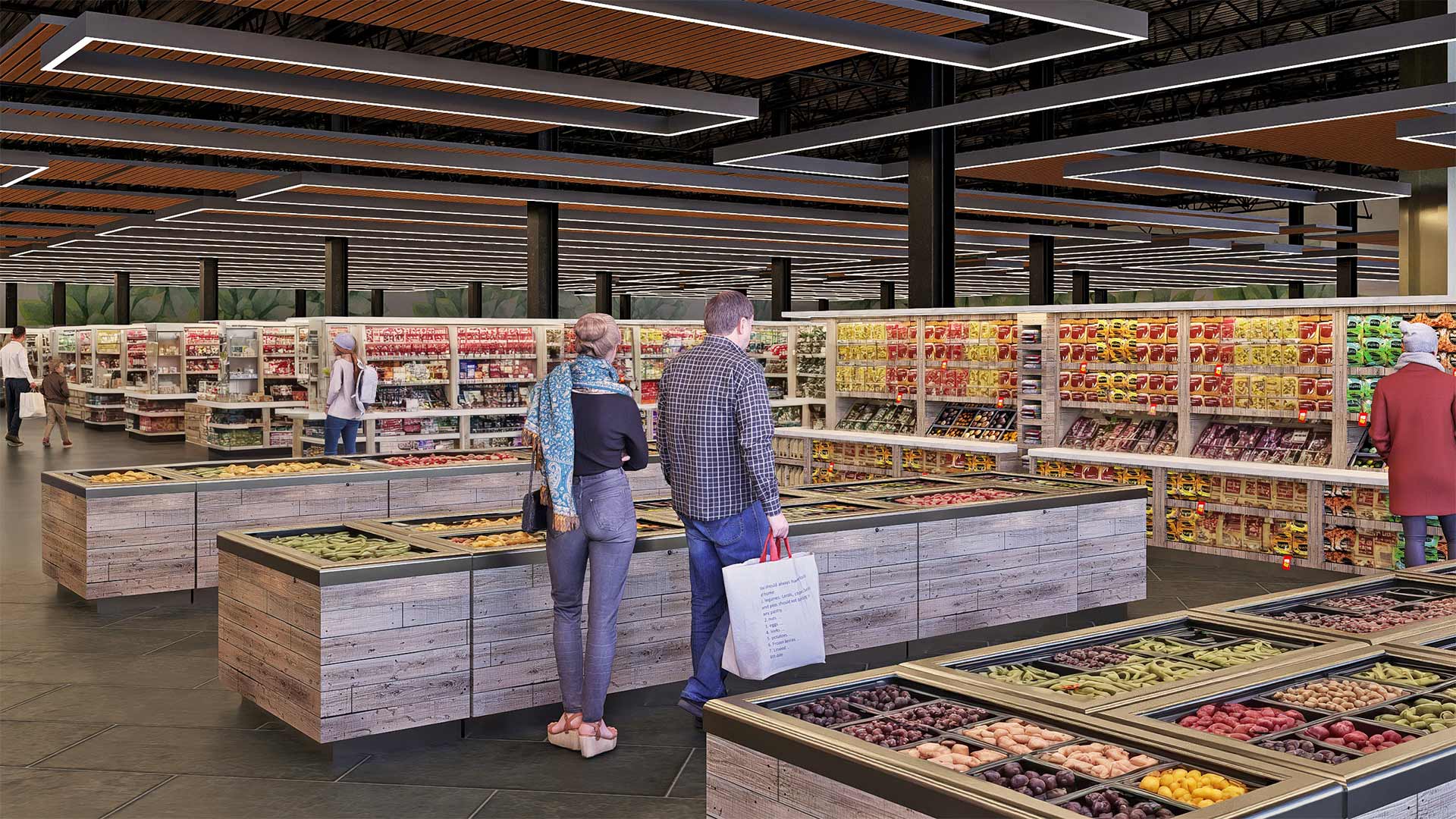
Shoppers can feel the same thing when strolling through a traditional supermarket that has made more liberal use of design elements that are common to specialty stores, such as wood, tile or specialty flooring; custom wood shelving; specialty lighting fixtures; brick, stone or architectural panels, and backlit neon or custom millwork signage.
In today’s more price-conscious environment, traditional grocers are under less pressure to incorporate such flourishes. In some markets, they would do well to embrace value-engineering and a more minimalist aesthetic. Think polished concrete floors, metal shelving units, simpler exterior cladding, industrial LED fixtures and no-frills signage.
The subtext created by these design elements reinforces value-oriented merchandising strategies such as placing more bargain bins in different parts of the store.
The business case for simplicity
A more minimalist approach can support your business strategy in other ways as well. While expansive in-store bars and cafés add opportunities to sell higher-margin items, some researchers note that they can be costly to build and maintain. They also take up a lot of space, which can make them best suited to the largest and most well-capitalized grocers.
Some value-oriented grocers are opting to achieve lower real estate costs by squeezing into smaller-footprint stores. In the case of Aldi, that’s about 22,000 square feet—enough room for open gondolas with fresh produce but generally not enough for elaborate cafés, sandwich shops and the like.
Smaller-format prototypes can be faster, cheaper and easier to build, potentially saving hundreds of thousands of dollars in buildout and leasing costs. That makes them easier to scale, which ultimately can help grocers deliver even more value. Only by scaling up and boosting brand awareness can the company develop the leverage it needs to negotiate lower costs with suppliers. These savings can then be passed down to shoppers.
Lenders and investors love to see lower-cost, higher-productivity store portfolios. When the grocer needs to fuel its expansion by building or leasing a massive distribution center in a new market, those stakeholders will be more willing to bankroll the effort.
Simpler doesn’t mean boring
None of this is to suggest that experience is no longer important in the supermarket industry. High-end specialty stores in places like New York or Los Angeles, as well as traditional supermarkets in the most affluent markets will keep on catering to discriminating tastes, as they should.
Neither does simpler design need to translate into a ho-hum customer journey with “cheap,” lower-quality products. Open layouts with fewer visual obstructions tend to add pop to the rainbow of fruits, vegetables and brightly colored packs on display. They draw attention to the SKUs rather than distract from them. It’s analogous to the way minimalist merchandising in fashion boutiques celebrates the upscale shoes or handbags on offer.
All supermarkets should be squeaky clean and well-organized, but those with fewer frills can bolster ROI and be a joy to shop even without Italian marble or $22 smoothies.
And they happen to stand a better chance of providing something that matters more than ever to millions of Americans right now—the experience of getting a good deal.
####
Steven Le and James Owens, both AIA, NCARB, serve regional and national retailers and grocers in their work at HFA Architecture + Engineering. Le is Senior Grocery + Retail Lead and Owens is a VP at the fully integrated multidisciplinary firm with offices in Bentonville, Ark.; Franklin, Mass.; Boston; Baltimore; Fort Worth, Texas; Springfield, Mo.; and Mexico City.


.avif)

.avif)